

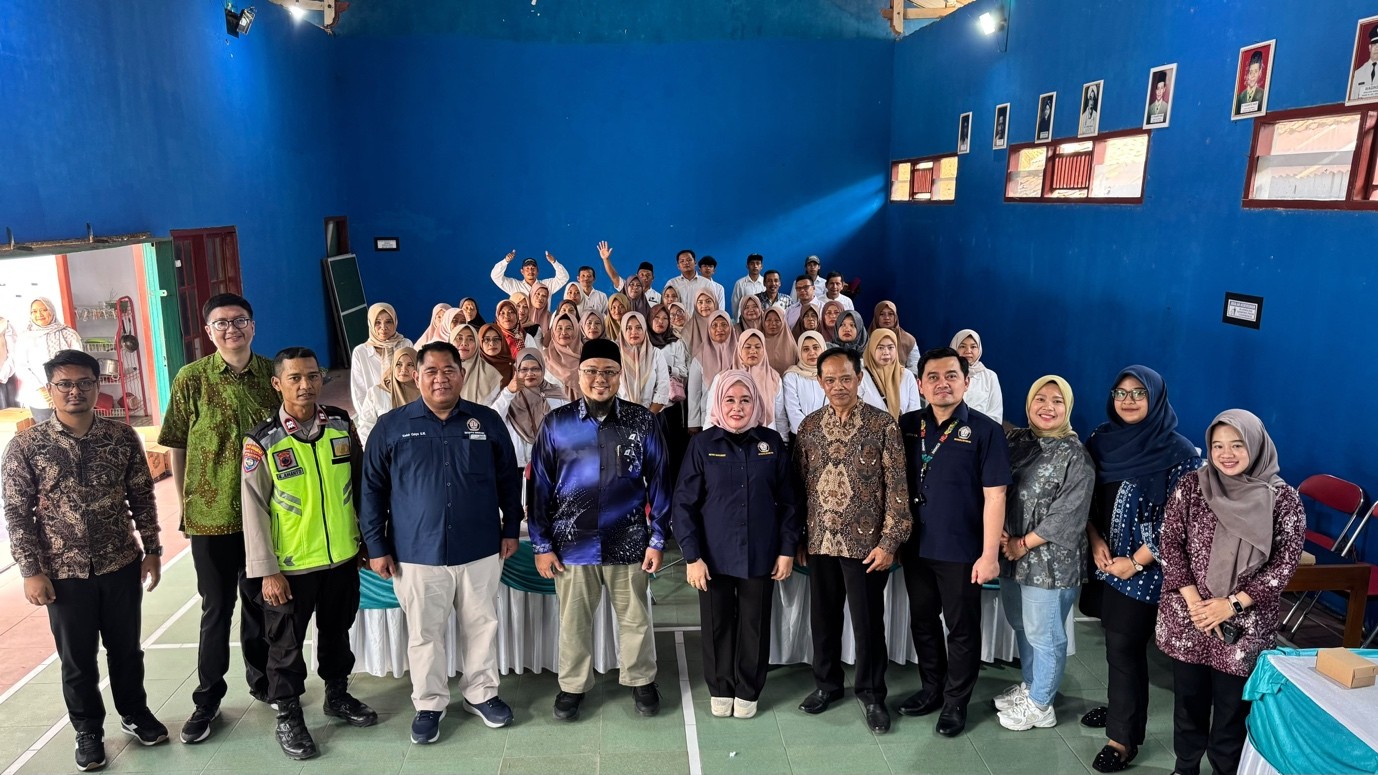
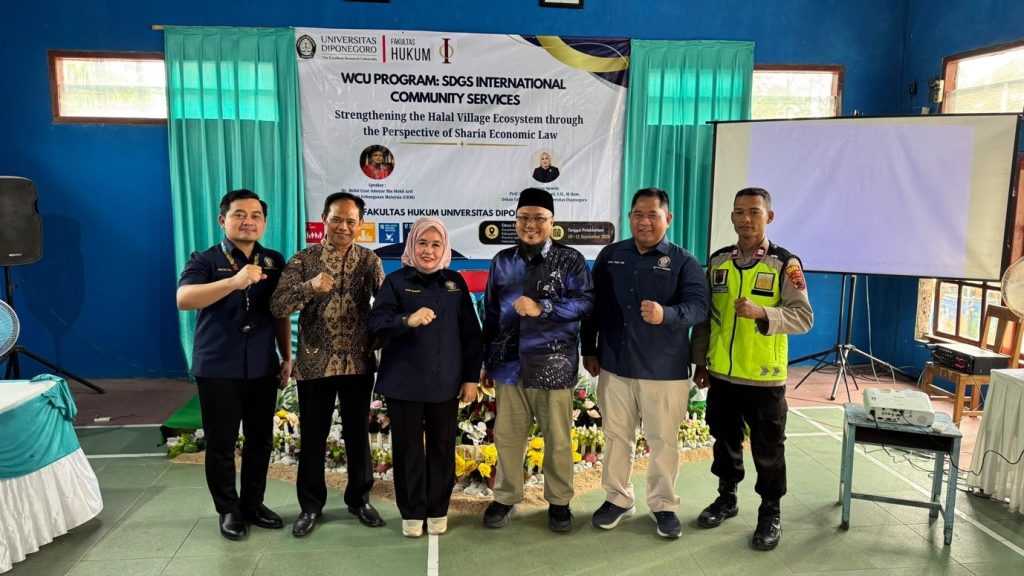
The Faculty of Law at Universitas Diponegoro (FH Undip), through its SDGs International Community Services (ICS) 2026 program, continues to bolster its contribution to community development while expanding international collaboration. Held on September 10–11, 2026, in Erorejo Village, Wadaslintang District, Wonosobo Regency, Central Java, the initiative focused on the theme, “Strengthening the Halal Village Ecosystem through the Perspective of Sharia Economic Law.” This activity is part of the Tridarma Perguruan Tinggi (the Three Pillars of Higher Education)—specifically, community service—and serves as a collaborative platform for FH Undip, the residents of Erorejo Village, and international partners to foster a robust halal village ecosystem.
The SDGs ICS 2026 program in Erorejo Village builds upon previous efforts to develop a “halal and food-safe” village. In December 2024, Erorejo was officially designated as a Halal and Food-Safe Village through a collaboration between the Wonosobo Regency Government, Universitas Diponegoro, the Indonesian Food and Drug Authority (BBPOM) in Semarang, the Indonesian Ulema Council (MUI) of Wonosobo Regency, and the Indonesian Association of Muslim Intellectuals (ICMI) of Wonosobo Regency. This development initiative aims not only to ensure compliance with halal and food safety standards but also to enhance the community’s economic potential and promote local products. The FH Undip SDGs ICS 2026 program represents a sustained commitment by the university, using a Sharia economic law perspective to deepen understanding among residents and micro, small, and medium-sized enterprise (MSME) operators of the development of a sustainable halal ecosystem.
The event drew 80 participants, including residents of Erorejo Village, MSME operators, village officials, and academic staff from the Faculty of Law at Universitas Diponegoro. The involvement of these stakeholders is expected to foster knowledge and experience exchange between higher education institutions and the community, particularly in developing a village’s economic potential.
The Faculty of Law at Universitas Diponegoro (FH Undip) invited Dr. Mohd Izzat Amsyar Mohd Arif from Universiti Kebangsaan Malaysia (UKM) to serve as a speaker. Dr. Izzat explained that while a halal certificate serves as proof of compliance with specific requirements, developing a “halal village” requires the consistent application of halal principles in daily activities. The concept discussed encompasses halalan tayyiban—ensuring that halal requirements are met while also prioritizing cleanliness, safety, and quality, and ensuring that no harm is caused.
The discussion also covered the importance of maintaining the integrity of the production process—encompassing raw materials, processing, storage, packaging, distribution, and sales. For MSMEs (micro, small, and medium-sized enterprises), documenting materials and suppliers and ensuring traceability in the production process are crucial for maintaining product consistency. The material further introduced the five pillars of a “halal and food-safe village” ecosystem: halal ingredients, hygienic processes, food safety, honest business practices, and consistent implementation.
This initiative aims to enhance public understanding regarding the importance of business governance aligned with *halal* principles, while encouraging MSMEs to manage their production processes and business operations more systematically. For the village government, this activity serves as a reference for identifying opportunities and requirements for developing a *halal* ecosystem in Erorejo Village.
The implementation of SDGs ICS 2026 is part of the Faculty of Law at Universitas Diponegoro’s efforts to expand its community service contributions by strengthening international cooperation. This initiative aligns with Universitas Diponegoro’s “World Class University” (WCU) program, specifically by fostering international networks and collaborations within the framework of the *Tridarma Perguruan Tinggi* (the Three Pillars of Higher Education).
Furthermore, SDGs ICS 2026 supports the achievement of several Sustainable Development Goals (SDGs): SDG 1 (No Poverty) by strengthening the community’s economic potential; SDG 8 (Decent Work and Economic Growth) by developing business activities and MSMEs; SDG 11 (Sustainable Cities and Communities) by building the capacity of rural communities; SDG 16 (Peace, Justice and Strong Institutions) by improving legal literacy; and SDG 17 (Partnerships for the Goals) through collaboration between the university, the community, the village government, and international partners. This activity represents a tangible contribution by the Faculty of Law at Universitas Diponegoro toward applying legal knowledge within society, while simultaneously reinforcing the implementation of the *Tridarma Perguruan Tinggi*. This activity is expected to benefit the community and MSME operators by developing the village’s economic potential, while also creating broader opportunities to strengthen the international cooperation of the Faculty of Law at Universitas Diponegoro (FH Undip).