

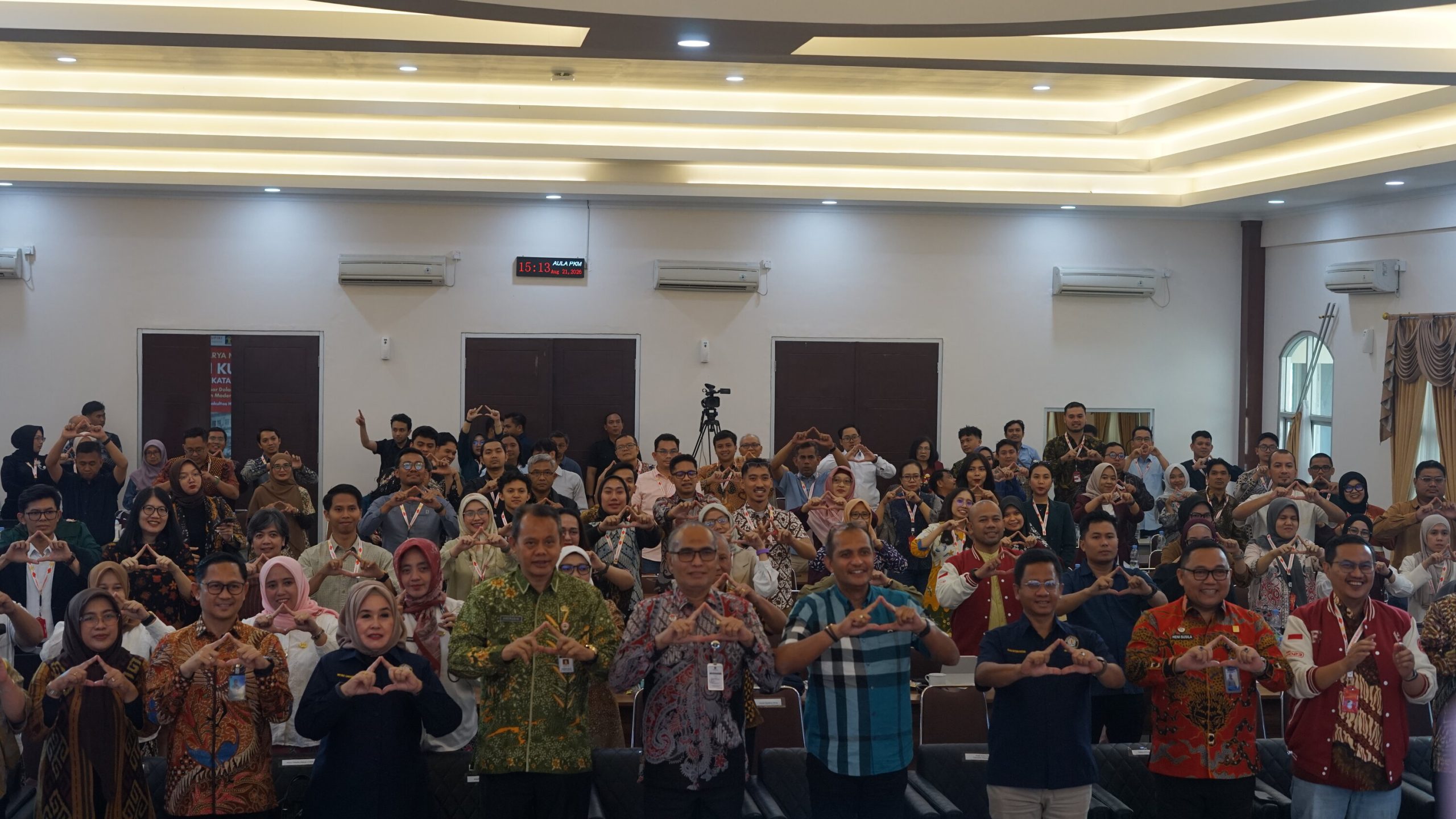
Semarang, August 21, 2026 — The Indonesian Association of Criminal Law and Criminology Lecturers (ASPERHUPIKI), in collaboration with the Faculty of Law at Universitas Diponegoro (FH Undip), organized a National Workshop on the New Criminal Code (KUHP) and Criminal Procedure Code (KUHAP). Titled “Aligning the Fundamental Ideas of Criminal Code and Criminal Procedure Code Reform to Realize Sentencing Alternatives in Indonesia,” the event took place from August 19–21, 2026, at the Faculty of Law, Universitas Diponegoro, Semarang.
The event served as an academic and professional forum that brought together academics, practitioners, and stakeholders to discuss developments in the reform of Indonesian criminal law, particularly the implementation of the National Criminal Code and the new Criminal Procedure Code, as well as the development of sentencing alternatives.
The workshop was opened on Wednesday (August 19) by the Dean of the Faculty of Law at Universitas Diponegoro, Prof. Dr. Retno Saraswati, S.H., M.Hum. The opening session also featured remarks from the Chairperson of ASPERHUPIKI, Fachrizal Afandi, S.Psi., S.H., M.H., Ph.D., and a representative from the ICJR.
Over the course of the three-day event, the workshop featured numerous criminal law academics and practitioners from various institutions. Discussions covered topics ranging from the fundamental ideas behind the reform and the evolution of principles in the National Criminal Code to sentencing alternatives, criminal liability, reforms to criminal offenses and implications for Indonesia’s sentencing system.
On the first day, presentations were delivered by, among others, Prof. Dr. Barda Nawawi Arief, S.H., Prof. Harkristuti Harkrisnowo, S.H., M.A., Ph.D., and Prof. Topo Santoso, S.H., M.H., Ph.D. On the second day, Thursday (August 20), discussions focused on the reform of criminal procedural law. Topics included developments in the doctrine of culpability and the adjudication of corporate crimes; alternative resolutions for criminal cases; and reforms to preliminary inquiries, investigations, prosecutions, evidentiary procedures, coercive measures, and pretrial proceedings under the new Criminal Procedure Code (KUHAP). Speakers included Dr. Chairul Huda, S.H., M.H., Dr. Febby Mutiara Nelson, S.H., M.H., Dr. Irma Cahyaningtyas, S.H., M.H., Fachrizal Afandi, S.Psi., S.H., M.H., Ph.D., and Dr. Mahmud Mulyadi, S.H., M.H.
On the third day, Friday (August 21), discussions continued with a focus on reforming the legal remedy process, the execution of sentences, non-custodial sentencing alternatives, and institutional strategies for law enforcement agencies for implementing sentencing alternatives following the enactment of the National Criminal Code (KUHP). The event also featured the launch of a book on Special Crimes and the signing of several cooperation agreements: an Implementation Agreement (IA) between ASPERHUPIKI and the Faculty of Law at Universitas Diponegoro (FH Undip); a Cooperation Agreement between FH Undip and BPSDM; and a cooperation agreement between BPSDM and the Central Java Provincial Government.
To conclude the event, Prof. Dr. Edward Omar Sharif Hiariej, Deputy Minister of Law of the Republic of Indonesia, delivered closing remarks titled “Harmonizing the 2023 Criminal Code, the Law on Criminal Adjustment, and the 2025 Criminal Procedure Code to Realize a Modern Sentencing System in Indonesia.” The proceedings concluded with remarks from the Vice Rector III of Universitas Diponegoro, Prof. Dr. Adian Fatchur Rochim, S.T., M.T., who officially closed the event. The collaboration between ASPERHUPIKI and the Faculty of Law at Universitas Diponegoro (FH Undip) through this workshop is expected to strengthen the dialogue among academics, practitioners, and stakeholders regarding criminal law reform. The forum also serves as part of an effort to build a comprehensive understanding of the National Criminal Code and the new Criminal Procedure Code, while fostering a modern and equitable sentencing system.