
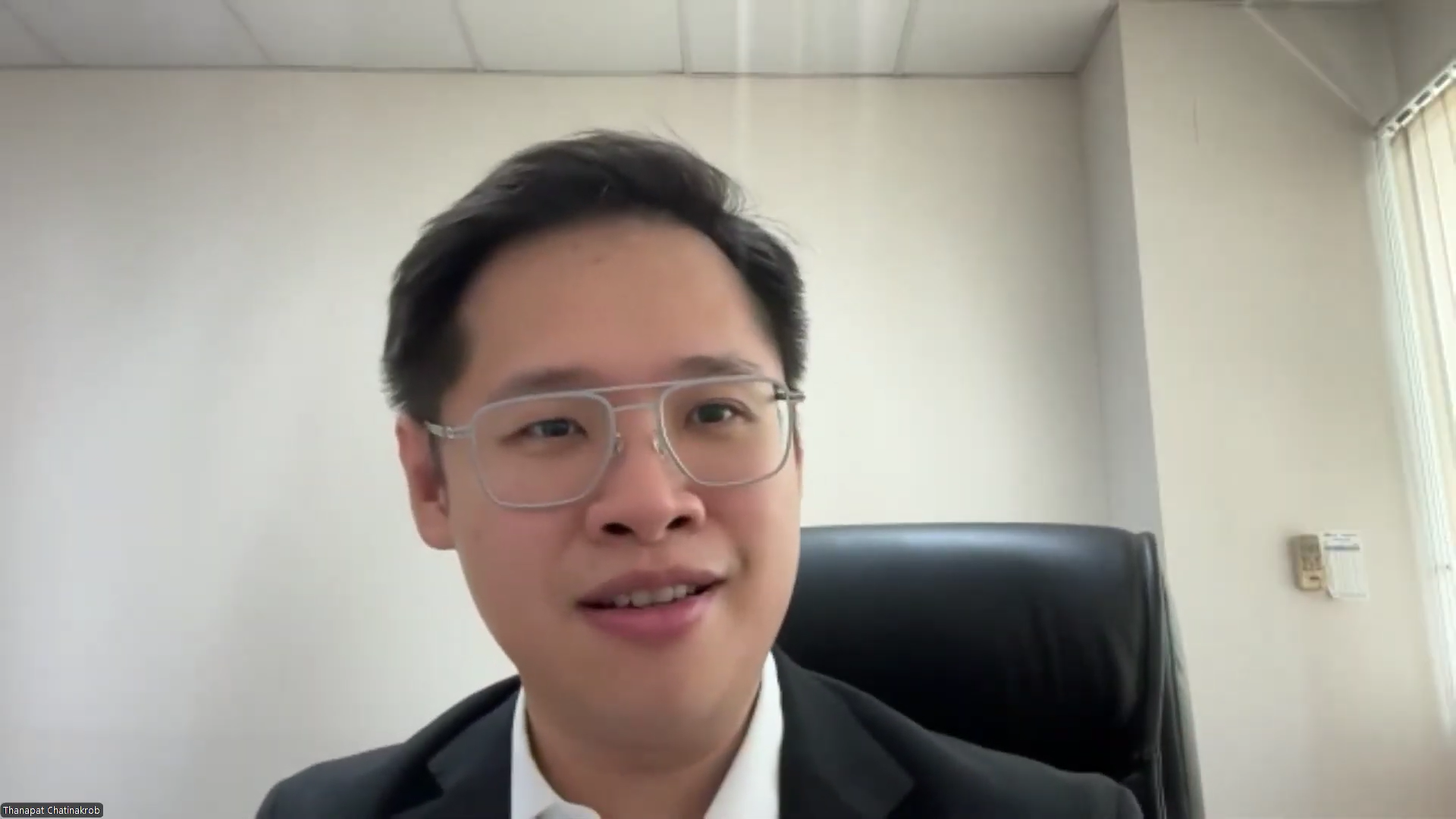
The Faculty of Law at Universitas Diponegoro (FH UNDIP) hosted Assoc. Prof. Dr. Thanapat Chatinakrob from the Faculty of Law, Thammasat University, Thailand, as part of the Undip Global Classroom (UGC) program. The session, themed “Thai Inheritance Law,” took place on Wednesday, October 7, 2026. Conducted via Zoom, this international lecture was designed for students enrolled in the Inheritance Law course, with Bunga Jasmine Puji Hapsari, S.H., M.Kn., serving as the discussant.
The lecture covered three core areas: the structure of Thailand’s inheritance legal system, intestate succession (succession by operation of law), and testamentary succession (succession by will). Together, these topics provide a framework for understanding the transfer of assets, rights, and obligations following an individual’s death.
In his presentation, Thanapat compared the codification of Thai inheritance law—found in Book VI of the Civil and Commercial Code—with the pluralistic nature of Indonesia’s inheritance system, which encompasses civil, Islamic, and customary (adat) laws. Furthermore, Thailand maintains specific provisions for the application of Islamic family and inheritance law in cases that meet certain criteria in the provinces of Pattani, Narathiwat, Yala, and Satun.
Discussions regarding the six statutory classes of heirs, the status of a surviving spouse, the renunciation of an inheritance, and the requirements for the validity and capacity to create a will deepened students’ understanding of the intersection between family law and property law. The freedom to draft a will also served as a gateway to examining the protection of family members’ interests. Through this comparative lens, the UGC program enabled students to grasp how similar inheritance issues can be addressed through distinct legal constructs. This initiative is part of FH UNDIP’s ongoing efforts to broaden students’ perspectives on law across jurisdictions and to strengthen international academic networks.