

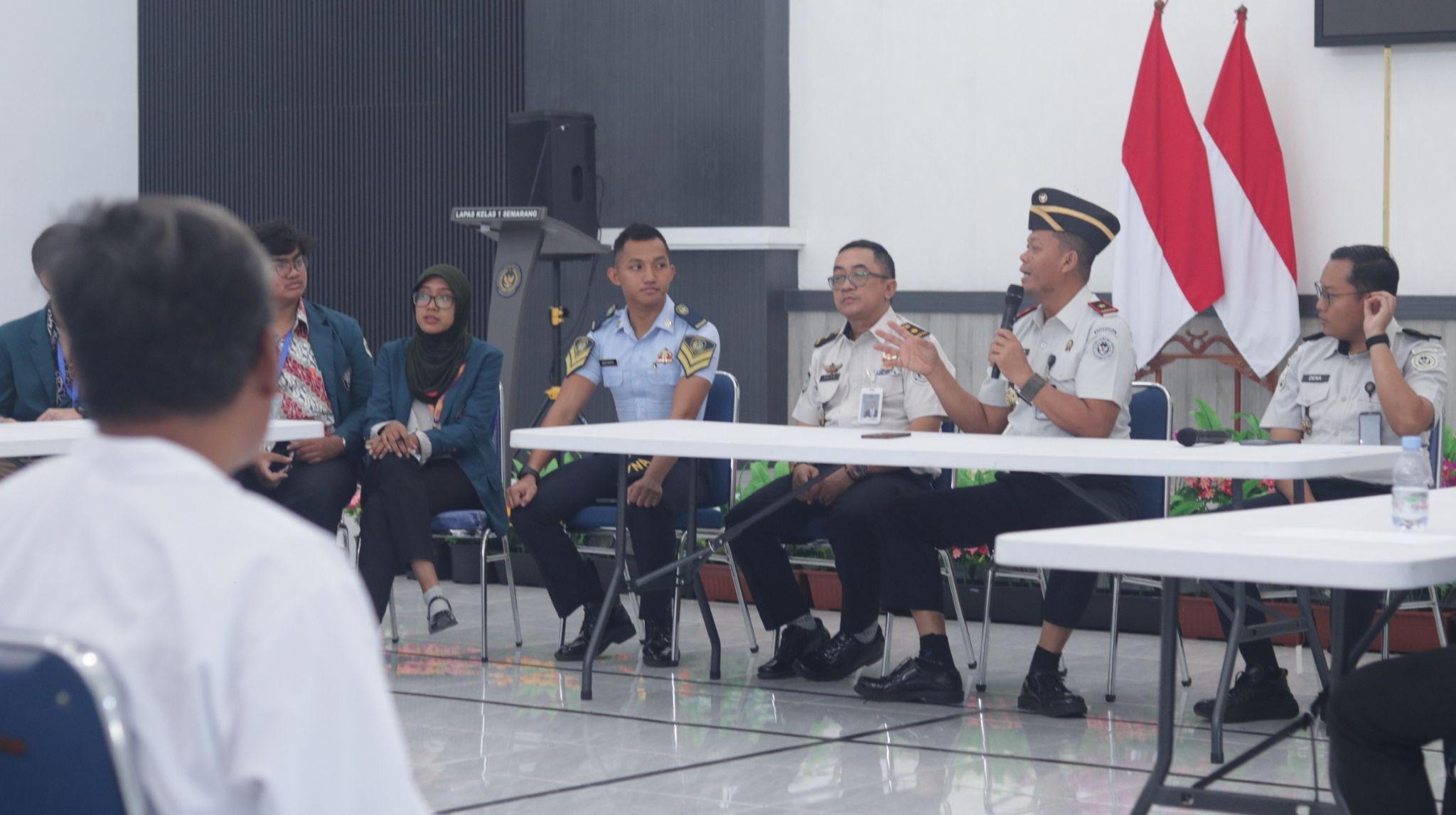
Semarang: The Head of the Semarang Class I Correctional Facility, Ahmad Tohari (center), delivers opening remarks and an introduction to students from Universitas Diponegoro’s KKN-T Team 83 during the inmate profiling activity.
Effective law enforcement aligns with the 16th Sustainable Development Goal (SDG): Peace, Justice, and Strong Institutions. Every individual possesses a unique story—a factor that makes each person special. It is the duty of law enforcement officials to transform correctional facilities into places that guide individuals from darkness toward the light. This process must be understood as a dynamic journey rooted in a humanistic approach. The stage of delving into an individual’s background is known as “inmate profiling.” This activity aims to gather information regarding each inmate’s background and the changes they have experienced while incarcerated.
To carry out this initiative, students from Universitas Diponegoro’s KKN-T Team 83—under the guidance of Field Supervisor Emy Handayani, S.H., M.Hum., and the Semarang Class I Correctional Facility’sFacility’s Liaison Lecturer Dr. Indra Waspada, S.T., M.TI., alongside prison staff—were given the opportunity on Wednesday, July 15, 2026, to converse and interact directly with inmates to complete their profiles. This activity also allowed law students to apply their academic knowledge by explaining law enforcement processes to the inmates. The session involved assigning approximately 50 inmates to 10 students; each student was given 5 to 10 minutes to ask a set of predetermined questions through casual dialogue. The results of these interviews serve as a basis for staff to evaluate the most appropriate guidance methodologies and assess other aspects of work performance.
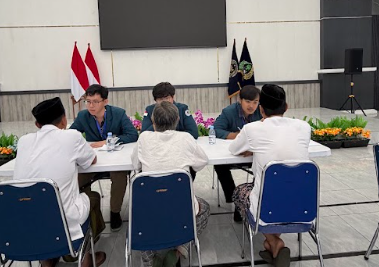
Activities Involving Correctional Facility Residents
The university students participating in the Community Service Program (KKN) from Universitas Diponegoro will gain a new experience—effectively applying the knowledge they acquired during their studies. They will learn to communicate and, potentially, to explain legal procedures or relevant legal principles; the resident participants might even consult with the students on legal matters. Hopefully, this will prove to be a valuable asset for all the students as they eventually embark on their careers in the legal field,” said Ahmad Tohari, Head of the Class I Correctional Facility in Semarang.