

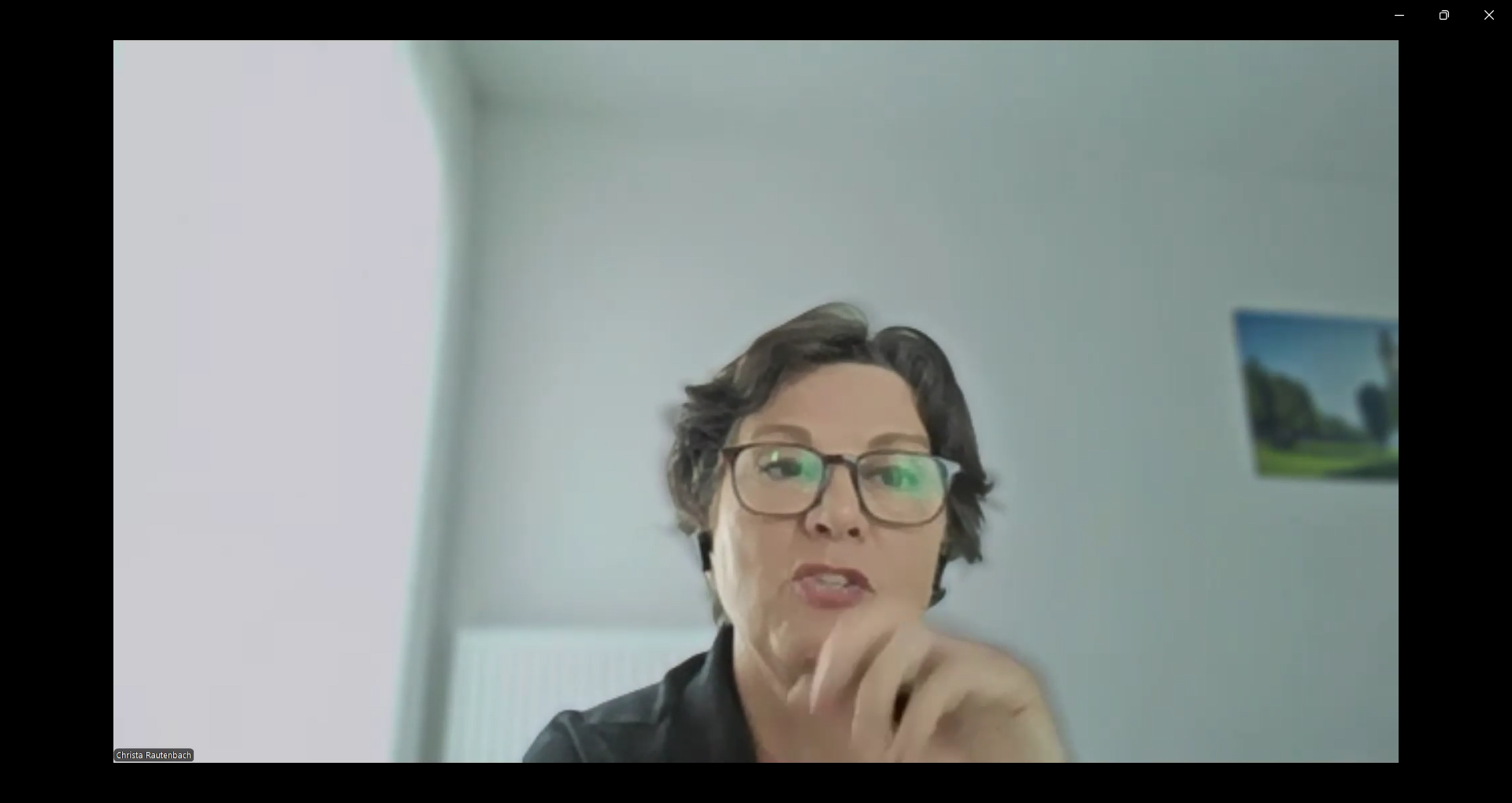
Semarang, September 1, 2026 – The Faculty of Law at Universitas Diponegoro (FH Undip) held a University Guest Class (UGC) featuring Prof. Christa Rautenbach from North-West University, South Africa, on Tuesday (September 1, 2026) at 19:00 WIB, conducted online via Zoom. The session, themed “Legal Pluralism: One Name, Several Ideas,” explored the concept of legal pluralism and its evolution across various legal systems.
In her presentation, Prof. Christa Rautenbach invited participants to understand legal pluralism as the coexistence of multiple legal orders and norms within a single social space. She explained that legal pluralism encompasses diverse perspectives, which can be examined through the lenses of legal anthropology, legal sociology, legal theory, and legal history.
Furthermore, Prof. Christa outlined the distinction between “legal centralism” and “legal pluralism.” Legal centralism views state law as the sole applicable legal system. In contrast, legal pluralism acknowledges the existence of various legal orders—including customary law, religious law, and norms that emerge within society—regardless of whether they are formally recognized by the state.
The discussion also covered the concepts of “weak legal pluralism” and “strong legal pluralism,” distinguishing between a diversity of rules established or controlled by the state and the coexistence of distinct legal orders that operate within society.
In the Indonesian context, Prof. Christa highlighted the state’s recognition of customary law communities (*masyarakat hukum adat*), as stipulated in Article 18B, paragraph (2) of the 1945 Constitution of the Republic of Indonesia. She also discussed the Constitutional Court Decision Number 35/PUU-X/2012 regarding customary forests (*hutan adat*) as a significant example in the development of the recognition of customary law communities in Indonesia.
By way of comparison, Prof. Christa highlighted the South African approach to recognizing customary law, as stipulated in Section 211(3) of the Constitution of South Africa. This comparison offers insight into the differing mechanisms for recognizing customary law in both countries, as well as the challenges involved in sustaining the existence and evolution of law within a society.
Furthermore, the UGC material addressed three core challenges within legal pluralism: the process of translating customary norms into the framework of state law, the imbalance of interests within a community, and legal uncertainty—the impact of which is not always felt equally by every individual.
Through this UGC initiative, the Faculty of Law at Universitas Diponegoro (FH Undip) provides an international academic perspective that enriches participants’ understanding of legal pluralism and the dynamics surrounding the recognition of non-state legal systems. The program is intended to broaden horizons and foster critical thinking about the complex relationship among state law, customary law, and the norms that emerge in the life of a society.