

The use of artificial intelligence (AI) in international taxation presents both new opportunities and legal challenges. While the ability of algorithms to process vast amounts of data can assist in determining transfer prices, it does not automatically guarantee the fairness of transactions between companies within the same corporate group.
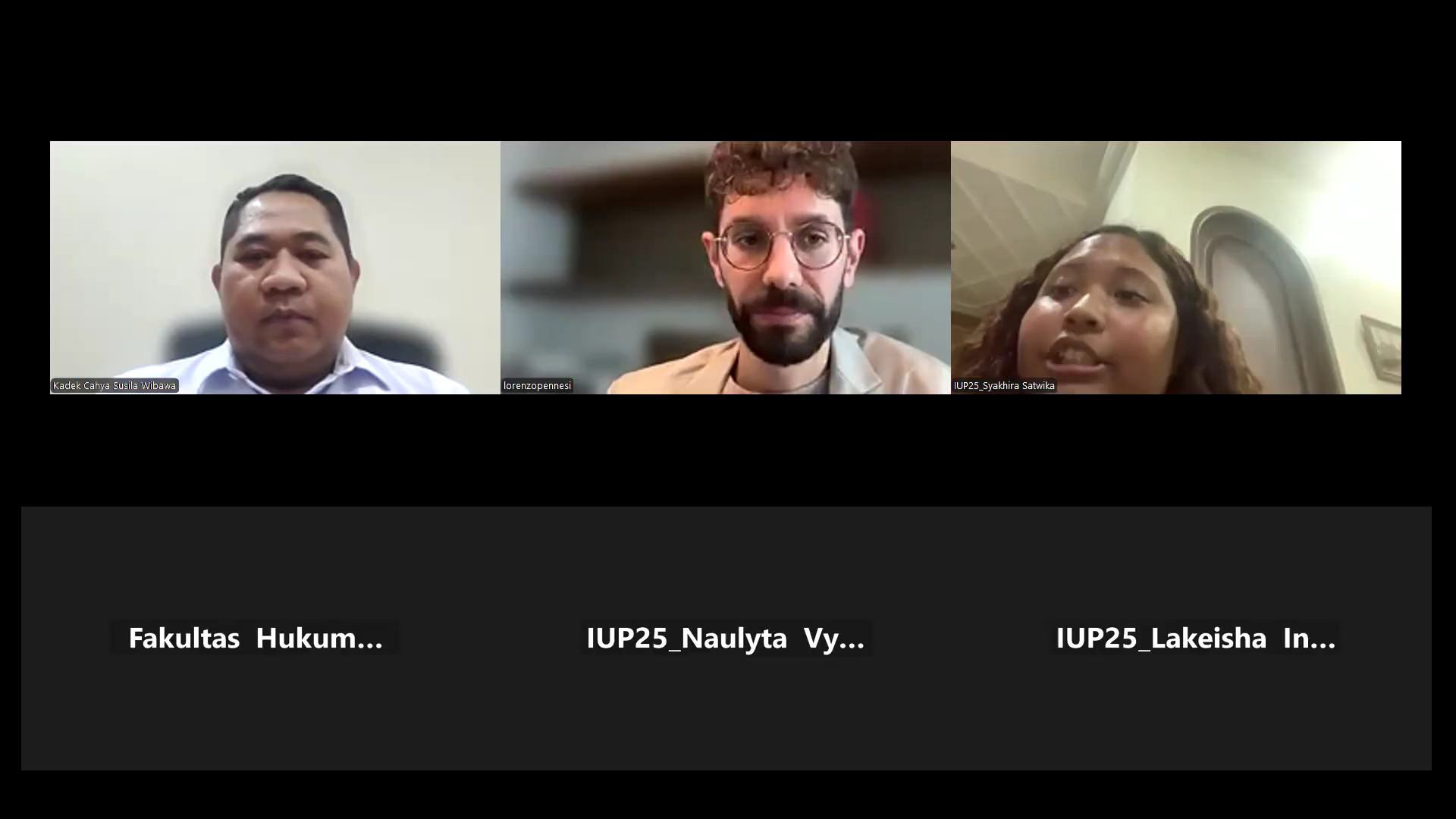
This issue was the focus of an “Undip Global Classroom” (UGC) session hosted by the Faculty of Law at Universitas Diponegoro on Tuesday, October 27, 2026. The online lecture, titled “Artificial Intelligence & Transfer Pricing,” featured Prof. Lorenzo Pennesi, Ph.D., from the University of Foggia, Italy, with Dr. Kadek Cahya Susila Wibawa, S.H., M.H., serving as a discussant. The session was designed for students enrolled in the Tax Law course within the International Undergraduate Program (IUP).
Prof. Pennesi specializes in tax law, with a particular focus on international taxation and comparative tax law. His presentation centered on the “arm’s length principle”—a standard used to assess whether the terms of a transaction between related parties are comparable to those that would exist between independent parties. This principle is critical because the pricing of intra-group transactions directly influences the allocation of profits and tax revenues across different jurisdictions.
In his lecture materials, Prof. Pennesi outlined two analytical stages: functional analysis and comparability analysis. Functional analysis examines the functions performed, assets employed, and risks assumed by each company. Meanwhile, comparability analysis evaluates transaction prices or margins by referencing relevant transactions between independent parties.
Artificial intelligence can facilitate the search for comparable data, the selection of transfer pricing methods, and the identification of anomalies. However, the quality of the final analysis remains contingent upon the quality of the underlying data and the accuracy of the assumptions applied. Algorithmic bias and a lack of clarity in decision-making processes can create issues when analysis results serve as the basis for tax audits.
The material also highlights transparency, the provision of justifications for decisions, and the opportunity to challenge audit findings as essential elements in tax authorities’ use of technology. In the course materials, Pennesi emphasizes that AI should function merely as a technical aid, while final judgment and accountability must remain with humans. For law students, this topic broadens their understanding of the relationship between technological advancement, the authority of tax administration, and the protection of taxpayers’ rights. Through the UGC (University Global Coalition) initiative, the Faculty of Law at Universitas Diponegoro (FH UNDIP) provides a space for studying tax law that goes beyond the mastery of legal norms, encouraging students to examine how the application of these norms is evolving.