

The cultural richness of the Indonesian archipelago is deeply rooted. It thrives in remote villages—exemplified by the hamlet of Wuluh Nampu in Peron Village, Limbangan District, Kendal Regency, Central Java. This area harbors authentic local cultural potential through its traditional dance, an art form imbued with philosophical meaning regarding communal cooperation (*gotong royong*) and the harmony of life within the community. Despite its inherent value, this ancestral heritage now faces challenges from the tide of globalization and the rapid advancement of information technology, which facilitates the easy influx of foreign cultures.
In the face of these threats, a group of proactive youths from the “Sanggar Langen Mudha Santosa” collective in Wuluh Nampu has taken concrete action. Recognizing the risk that their unique traditions might be overshadowed, they have adopted an innovative approach by leveraging the very tools of globalization: technology and digital culture. Beyond merely conducting dance rehearsals, they are actively documenting and archiving the history of the art form, while also packaging performances into creative audiovisual content—distributing it widely across social media platforms and digital spaces.
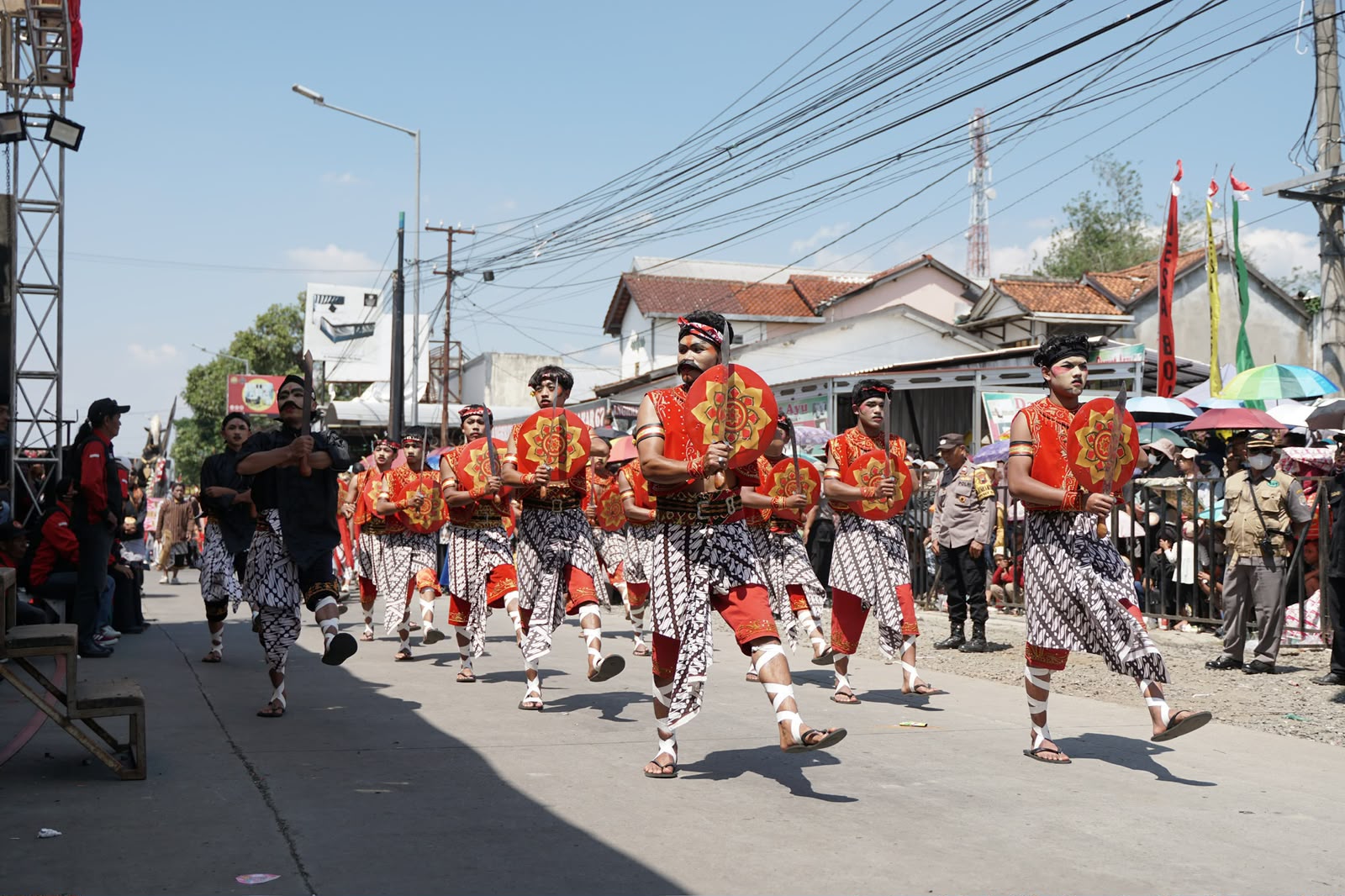
The *Soreng* dance is one such cultural asset preserved by the Wuluh Nampu community to this day. Originating from the creative minds of artists in Magelang Regency—specifically on the slopes of Mount Merbabu and Mount Andong—this traditional dance found its way to Wuluh Nampu in the 1980s. The name itself, derived from the terms “suro” and “ing,” signifies a warrior figure who remains victorious wherever he may be. Parno, head of the arts group in Wuluh Nampu hamlet, explains that “because this dance originated in a mountainous, remote village, the movements of the *Soreng* dance are defined by a firm, powerful, and grounded stance.” These movements reflect the physical strength of mountain dwellers, who are accustomed to hard labor from dawn until dusk—traversing steep slopes while carrying the yields from their fields and gardens. The *Soreng* dance, typically performed by at least 10 people, has been expanded by the youth of the *Sanggar Langen Mudha Santosa* arts collective into a grand, large-scale production featuring 16 dancers. They portray various key roles—such as Wiropati, Adipati Arya Penangsang, the commander *Patih Rongga Meraung*, and soldiers of various ranks. The choreography, armed with swords and shields, showcases bold, resilient, and emotionally charged footwork.

Adding to this rich historical tapestry, the Sanggar Langen Mudha Santosa troupe preserves the Sekarlele dance, which depicts the military drills of Prince Diponegoro’s forces as they prepared to battle the Dutch. The dance is performed by 13 individuals: eight carrying spears, four wielding swords, and one serving as commander. Its unique visual appeal lies in costumes that blend traditional Javanese attire with elements of Ottoman Turkish military uniforms, complete with distinctive sashes.
The allure of these dances stems from a compelling combination: narratives of heroism (featuring figures like Arya Penangsang and Prince Diponegoro), choreography that reflects the resilience of highland communities, and a rare Javanese-Turkish fusion in the dancers’ attire. Together, these elements transform the performances into a valuable form of both historical education and cultural tourism.
The dedication shown by these young people has garnered significant public recognition. The Wuluh Nampu arts tradition has been successfully showcased at prestigious regional events, including the 80th Indonesian Independence Day carnival—organized by the Kendal Department of Arts and Culture—and the 420th anniversary of Kendal Regency. These milestones demonstrate how the innovation and concrete actions of the youth have brought their cultural heritage out of remote villages, establishing it as a source of regional pride amidst the rapid tide of globalization.
The challenges posed by the swift pace of modern life, met by the proactive response of the youth in Wuluh Nampu Hamlet, underscore the vital role of the younger generation as agents of cultural preservation. It is hoped that young people will continue to be part of the solution—fostering strong collaborations to revitalize and elevate local cultural traditions. Addressing the urgent need for such collaboration—and as a tangible demonstration of their commitment to preserving the cultural heritage of Dusun Wuluh Nampu—the Community Service Division of the Student Executive Board of the Faculty of Law, Diponegoro University (DIMAS BEM FH Undip), has stepped in to play an active role. This synergy is manifested in various efforts to introduce and promote local culture, aligning with the digitalization initiatives already underway among local youth—specifically by leveraging social media and news outlets. Through these combined efforts, it is hoped that the cultural heritage of Dusun Wuluh Nampu will gain wider recognition, ultimately providing concrete benefits for both the preservation of local culture and the community itself.